

You bought it for better sleep. You wake up at 3am kicking it off. Here’s what’s actually going on.
It always starts the same way. You fall asleep under the blanket feeling perfectly held — the pressure gentle, the weight just right. Somewhere around 2 or 3am, you surface. One leg is already out. The air under the blanket feels thick. You lift the edge and a wave of warmth escapes, and in that brief moment before you pull it back over, the cool air is so good it almost hurts. You spent weeks reading reviews. You paid real money for this thing. It was supposed to help you sleep better.
And in a way, it does — until it doesn’t.
The contradiction nobody expects
Weighted blankets have genuine appeal. The deep pressure they create can reduce anxiety, slow a racing mind, and help the body settle into rest. Plenty of people find them genuinely useful. The problem is that many of those same people stop using them by April and don’t pick them up again until November.
A blanket marketed for relaxation becomes something you have to strategically manage through the night. That’s its own kind of stress. The conventional explanation is that the weight is the problem — that heavy things are hot, and if you want to be cooler, you want something lighter. This sounds reasonable. It’s also not quite right.
Most people blame the weight. That’s not the real problem.
Weight on its own doesn’t generate heat. What it does do is press a blanket into sustained, close contact with your body all night long. And that changes everything about how the material beneath it behaves.
A regular blanket floats. It settles loosely, shifts when you move, traps a small pocket of air that can exchange with the room. A weighted blanket doesn’t do any of that. It stays put. It conforms. It holds itself against you for eight hours without lifting. Whatever material it’s made from has all night to do its job — or fail at it.
The issue, in almost every case, is what that material is.
The “trapped heat” feeling
It’s worth being precise about what actually happens, because it’s often misread as sweating or overheating in the usual sense. The feeling is more specific than that: a slow, dense warmth that builds through the night, not dramatic, not drenching — just increasingly stuffy. Like being sealed in rather than being too warm. The air beneath the blanket stops moving. It becomes humid and still. The temperature difference between under the blanket and above it becomes something you notice.
By the time it wakes you up, it’s been building for hours.
Nobody talks about the polyester problem

Most weighted blankets on the market are covered in plush fabric — microfiber, fleece, minky, or some variation of polyester-based softness. This is understandable from a product perspective. These materials feel good in the store. They photograph well. They suggest comfort in a way that bare cotton doesn’t. When someone picks up a weighted blanket and strokes the cover, a soft polyester surface says: this will feel nice.
What it doesn’t say is that polyester holds heat almost perfectly. It traps the warmth your body produces and keeps it exactly where you don’t want it — against your skin, all night, going nowhere.
This is a mild annoyance under a regular blanket. Under a weighted one, which stays pressed to your body without ever lifting, it compounds steadily until something wakes you up.
“The blanket amplifies whatever the fabric does. If the fabric traps heat, the weight just ensures it has all night to do it.”
Why fabric matters so much more with weighted blankets
Normal blankets ventilate naturally. You shift in your sleep, the blanket adjusts, air moves through. You don’t notice it, but it’s happening constantly. The material matters, but the gap between good and bad fabric is narrow because the blanket isn’t staying in fixed contact with your skin.
A weighted blanket removes that buffer entirely. There’s no floating, no shifting, no passive airflow. The cover sits against your body the way a compress would. In that situation, the fabric isn’t just a texture — it’s the primary factor in whether the blanket is comfortable or not. Most people never think about this when they’re buying one.
The “cooling weighted blanket” marketing trap
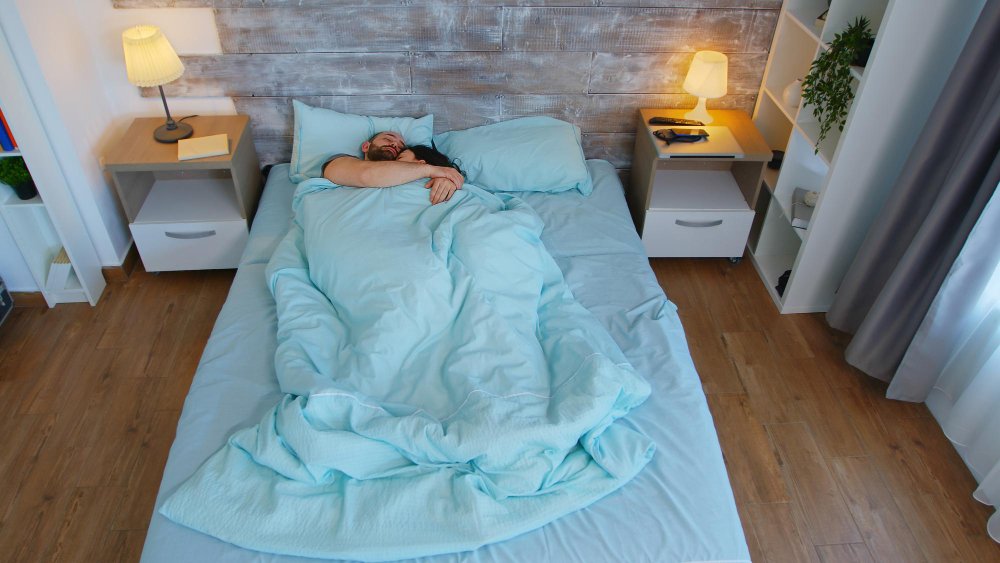
In recent years, a category has emerged: the cooling weighted blanket. These products lean into words like bamboo, breathable, temperature-regulating, and cool-to-the-touch. Some use beads marketed as cooling technology. Some add a thin layer of something described as phase-change material.
Some of these innovations are genuine. Many are not — or at least, they’re not the full picture. The most common issue is that the outer cover, the surface that actually touches your skin for eight hours, is still synthetic. The fill may be lighter; the label may say bamboo; but if the sleep surface is polyester, the airflow problem remains exactly the same. You cannot market ventilation into a material that doesn’t ventilate.
The word bamboo in particular has become almost meaningless on blanket labels. Bamboo fiber can be breathable, but when it’s been processed into a synthetic-feeling viscose and woven tightly into a plush cover, its original properties are largely gone. What you’re left with is soft polyester that sounds natural.
The cover might matter more than the blanket
There’s a quiet irony in how people shop for weighted blankets. They compare fill weight, glass beads versus plastic pellets, inner construction, bead distribution. These details matter. But the thing that actually touches their skin all night — the outer cover — often gets almost no attention.
If you use a duvet insert inside a cover, you understand this intuitively: a scratchy or hot cover ruins a good duvet. The same logic applies here, perhaps even more so, because the cover on a weighted blanket can’t be easily swapped out. Whatever’s there is what you sleep against.
This is why some people who have otherwise good weighted blankets find them dramatically more comfortable after switching to a breathable cover, or after putting the blanket inside a linen duvet cover. The weight hasn’t changed. The distribution hasn’t changed. The only thing that changed is what the air and fabric touching them are made of.
Why linen feels different
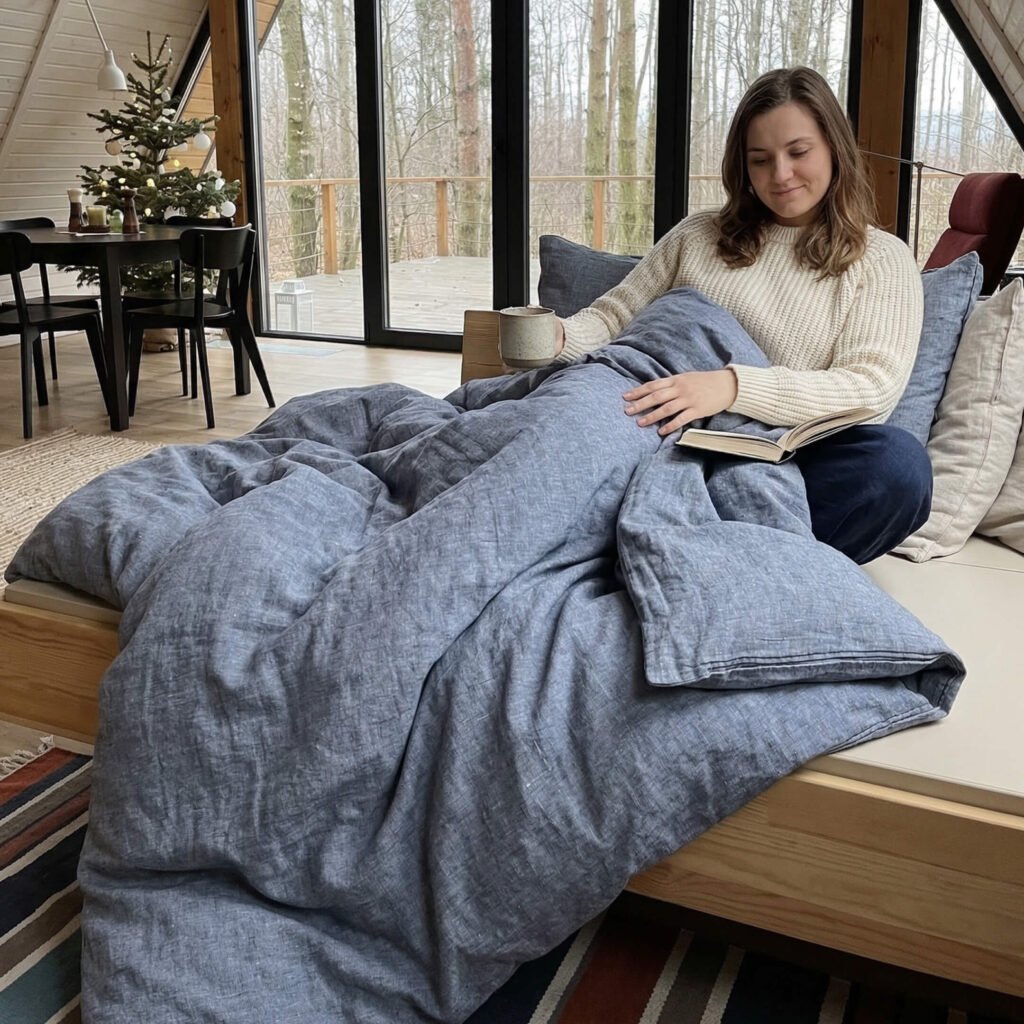
This isn’t a pitch for any specific material, but linen is worth understanding because its properties are the opposite of polyester in the ways that matter most here.
Linen doesn’t hold heat close. It’s loosely woven enough that air can move through it, even under a weighted blanket. It also absorbs moisture and releases it — so the small amount of humidity that builds against your skin overnight has somewhere to go. The result isn’t dramatic: you don’t feel a cooling effect, exactly. It’s more that the sealed-in feeling never develops. The blanket still feels present and grounding, just not suffocating.
Linen also feels slightly different against skin than polyester — less silky, more textured, dryer. Some people find this takes adjustment. But for people who’ve been waking up hot under a weighted blanket, it often solves the problem without any other change.
Who notices this most
- Hot sleepers who always run warm
- Memory foam mattress owners
- Couples sharing a blanket
- Anyone using one in summer
- Anxious sleepers who also sweat at night
- Warm-climate households
If you’re already a warm sleeper, or if your mattress traps heat beneath you, the blanket becomes the second layer of the problem. Couples sharing a weighted blanket compound each other’s warmth without any airflow to compensate. And if you live somewhere that doesn’t cool down at night, the slow heat buildup happens faster and wakes you earlier.
Most people don’t actually want a warmer weighted blanket. They want the calming pressure — and they want to sleep through the night without waking up to kick it off.
Weighted blankets aren’t inherently too hot. The physics of pressure and warmth don’t require that tradeoff. But most are built with materials that trap heat, and the weight ensures those materials stay close to your body all night with no opportunity to ventilate. The blanket you bought to help you sleep is doing exactly what it was designed to do. It just wasn’t designed with airflow in mind.
That’s the problem. And it’s a more solvable one than most people realize.